
BET surface area accuracy depends on controlled sample pretreatment, adsorbate choice and bath temperature stability, instrument calibration and leak integrity, and rigorous selection of the P/P0 range for linear BET fitting. Microporosity and pore-size distribution distort low‑pressure linearity and require complementary analyses. Deterministic data processing specific surface area, documented outlier handling, and traceable calibration records prevent biased Vm estimates. Exhaustive reporting of procedures, raw files, and uncertainty budgets is essential; further sections describe practical checks and corrective workflows.
Sample Pretreatment and Conditioning
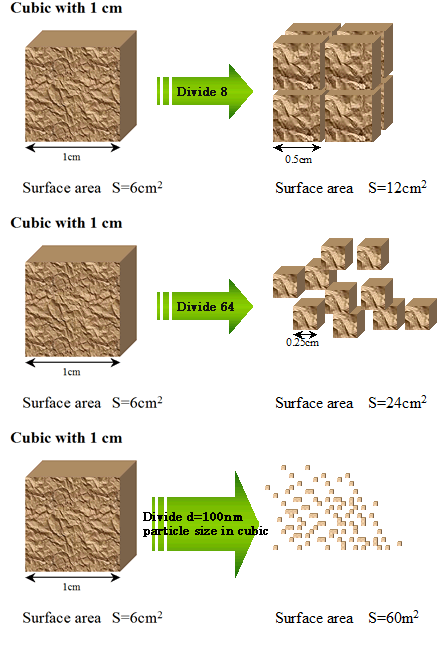
Prior to gas adsorption measurement, sample pretreatment and conditioning must remove adsorbates and restore intrinsic porosity without altering pore structure. The protocol specifies ramp rates, hold times, and maximum temperatures to achieve thermal history control, preventing structural collapse or sintering. Vacuum or inert purge efficacy is quantified; residual partial pressures are tracked to confirm desorption equilibrium. Transfer and storage procedures minimize moisture readsorption by maintaining controlled atmosphere and rapid sealing. Characterization checkpoints—mass loss, baseline adsorption Lab Alliance, and spectroscopic markers—verify reproducibility. Documentation of pretreatment parameters enables traceability and permits systematic evaluation of their impact on BET surface area accuracy.
Selection of Adsorbate and Temperature
Effective pretreatment establishes a defined initial state for adsorption measurements, after which the choice of adsorbate species and measurement temperature determines the interaction regime probed and the physical interpretation of the resulting BET area. Adsorbate selection must match pore size, surface chemistry and measurement goals: nitrogen at 77 K is standard for mesopores, argon at 87 K reduces specific interaction with polar sites, and krypton suits low-surface-area samples. Temperature control guarantees reproducible vapor pressure, adsorption kinetics and monolayer formation. Rigorous reporting of adsorbate, bath stability, and equilibration criteria enables controlled comparisons and limits misinterpretation due to differing adsorption potentials.
Instrument Calibration and Leak Management
In calibrating adsorption instruments and managing system leaks, traceable reference standards and systematic leak-testing protocols are essential to guarantee BET area accuracy. Instrument performance is validated against certified standards following a documented calibration schedule; deviations trigger corrective actions. Leak detection employs pressure-decay and helium methods with quantified acceptance criteria to prevent background adsorption errors. Routine verification minimizes drift and preserves measurement reproducibility. Data logging and timestamped certificates support auditability and instrument control. Responsibilities and intervals are defined in procedures to secure adherence and prompt remediation.
- Calibration schedule: frequency, tolerances, records
- Leak detection: methods, thresholds, response
- Verification: audit trail, corrective actions
Choice of Pressure Range and BET Plotting
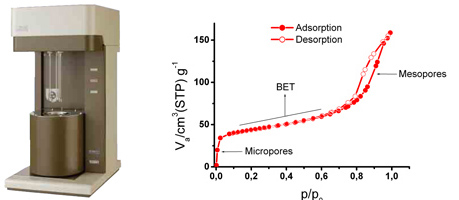
Selection of the appropriate P/P0 interval critically determines identification of the linear BET region and consequently the validity of the monolayer fit. Systematic plotting across candidate P/P0 ranges with quantitative evaluation of fit residuals allows objective discrimination of spurious versus robust linearity. Reporting the chosen range, corresponding slope/intercept statistics, and residual patterns enables reproducible assessment of BET surface area accuracy.
Linear BET Region
When determining the linear BET region, analysts must identify the pressure interval over which the BET equation yields a statistically linear relationship between P/[V(P0−P)] and P/P0; this choice directly controls the accuracy of the monolayer volume and hence the calculated surface area. Linearity assessment requires objective metrics (R², residuals, weighted fits) and iterative checks for region consistency across replicate isotherms. Analysts should document selection criteria and rejection thresholds to maintain reproducibility. Considerations include data quality, noise, and heterogeneity effects; the region must be defensible, minimal, and stable to avoid bias in monolayer estimation.
- Statistical metrics
- Replicate consistency
- Documentation
P/P0 Selection
Across the low-to-moderate relative pressure range, careful choice of P/P0 endpoints critically determines the validity of the BET linear fit and the resulting monolayer volume estimate. Selection should exclude regions exhibiting adsorption hysteresis or incipient multilayering; endpoints must capture true linearity without extending into capillary condensation domains influenced by relative humidity effects. Practitioners routinely evaluate multiple contiguous intervals, prioritize consistency across replicates, and document selection criteria quantitatively. Optimal P/P0 windows minimize systematic bias in Vm while preserving signal-to-noise. Transparent reporting of endpoint bounds, justification for exclusion of anomalous segments, and awareness of environmental humidity coupling enable controlled, reproducible surface area determinations.
Fit Residuals Analysis
Evaluating fit residuals provides an objective metric for judging the suitability of the chosen P/P0 interval and the linearity of the BET plot. The practitioner inspects residual patterns to detect systematic deviations indicating inappropriate pressure ranges, multilayer onset, or equipment bias. Goodness metrics (e.g., RMSE, R² adjusted) quantify scatter and enable comparison between candidate fits. Decisions prioritize consistency across replicate runs and minimal structured residuals over maximal range length. Recommended actions include narrowing the interval, testing alternative plotting transformations, or excluding anomalous points to restore model validity.
- Compute residual patterns across P/P0.
- Apply standardized goodness metrics.
- Iterate interval selection until residuals are random.
Effects of Microporosity and Pore Size Distribution
In porous solids, microporosity and the shape of the pore size distribution exert primary control over BET surface area determinations because they alter gas adsorption regimes and the validity of BET model assumptions. Micropore characterization demands targeted measurement strategies since high micropore volume promotes enhanced adsorption at low relative pressures, causing apparent surface area inflation if multilayer assumptions fail. Controlled analysis must account for adsorption kinetics limitations in narrow pores, diffusion resistances, and pore-filling mechanisms distinct from multilayer formation. Accurate interpretation relies on complementary methods (t-plot, DFT models) and deliberate selection of pressure ranges to constrain model applicability and minimize systematic bias.
Data Processing, Outlier Handling, and Reporting Practices
Data processing protocols for BET measurements should specify systematic data cleaning steps, including baseline correction, smoothing parameters, and criteria for truncating isotherm regions. Robust outlier identification methods—such as standardized residual analysis, influence diagnostics, and reproducible threshold rules—must be applied to distinguish measurement artefacts from genuine sample variability. Reporting standards should require explicit documentation of processing workflows, statistical criteria used for outlier rejection, and presentation of both raw and processed data to enable independent assessment of surface area determinations.
Data Cleaning Protocols
For robust BET surface area analysis, a systematic data cleaning protocol defines stepwise procedures for raw signal validation, preprocessing transformations, and anomaly resolution to guarantee reproducibility and traceability. The protocol enforces baseline validation and metadata capture, standardized unit conversions, and documented transformation kernels. Quality flags and immutability of original files preserve auditability. Automated scripts apply deterministic filters; manual interventions require recorded rationale. Reporting templates summarize retained, corrected, and excluded points with versioned code references.
- Standardize inputs and units, enforce baseline validation.
- Apply deterministic preprocessing, log metadata capture.
- Document corrections, preserve originals for audit.
Outlier Identification Methods
Following the established cleaning protocol, outlier identification methods define objective criteria and algorithmic procedures to detect, classify, and document measurement anomalies in BET surface area datasets. Procedures combine robust statistics and machine learning to flag deviations from expected adsorption behavior, using trimmed estimators, Hampel filters, and isolation forests. Decision thresholds balance false positives and negatives; flagged points undergo reproducible review workflows. Metadata capture records algorithm, parameters, and rationale. A concise validation matrix guides selection and escalation.
| Method | Strength | Typical Use |
|---|---|---|
| Hampel filter | Resistance to tails | Small samples |
| Isolation forest | Nonlinear patterns | Large datasets |
Reporting Transparency Standards
In establishing reporting transparency standards, the protocol mandates explicit documentation of all data processing steps, outlier handling decisions, and reporting practices to guarantee reproducibility and interpretability of BET surface area results. The document requires linkage of raw files to processed outputs, versioned scripts, and rationale for exclusions. Measurement traceability is documented through calibration logs; uncertainty budgets accompany each reported value. Access controls and audit trails are specified to prevent undocumented edits.
- Record processing sequence, software versions, and parameter choices.
- Log outlier criteria, statistical tests, and decision timestamps.
- Publish uncertainty budgets, calibration data, and traceability paths.
Conclusion
Accurate BET surface area determination depends on rigorous sample pretreatment, appropriate adsorbate and temperature selection, and meticulous instrument calibration with verified leak integrity. Selection of a suitable pressure range and correct BET plotting criteria mitigate systematic errors, while accounting for microporosity and pore-size distribution prevents misinterpretation of monolayer capacity. Robust data processing, objective outlier handling, and thorough reporting guarantee reproducibility and enable quantitative comparison across studies, ultimately improving measurement reliability and traceability.